Conflate
One program. Several languages. Explicit boundaries.
Use the language that fits each part of the job
Conflate is an experimental polyglot language for using Python, C++, Rust, Java, and Go in one
.confl file. Each block keeps the language’s normal syntax and libraries. You
declare the values a block reads and publishes; Conflate prepares the entry
points and JSON bridges between them.
The point is practical: use Python where quick data handling and its ecosystem save time, Rust where memory-safe parsing and checked arithmetic matter, C++ for native code you already have, and Java for an existing library or service. Go, PHP, and JavaScript can fit the same setup through their supported integrations. Conflate handles the data exchange, so you can change the Python workflow without rewriting the Rust code or building a separate wrapper.
View the source · Install the release · Read the language specification
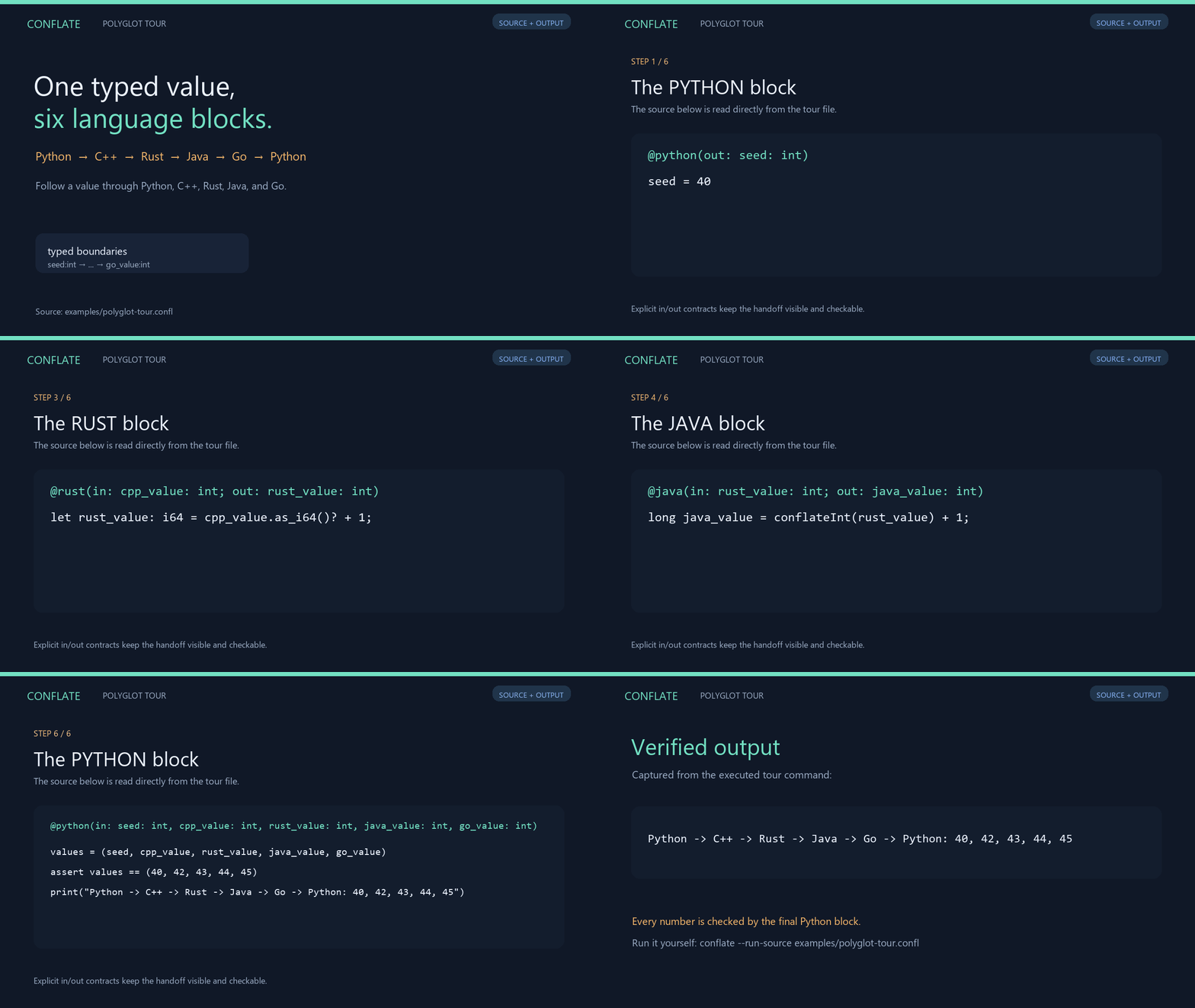
The animation comes from the five-language example below. It is a compact way to see the syntax; the smaller Python and Rust example shows a more typical use of the runtime.
Start with Python and Rust
The orders example has Python provide order rows as strings and format the final report. Rust parses the quantities and cents, uses checked arithmetic, and rejects malformed, negative, or overflowing rows. Change the report in Python; keep the validation rules together in Rust.
conflate --run-source examples/rust-python-orders.confl
The example notes include the sample output and explain the validation choices.
Try the full tour
Install Python 3.11+ and the toolchains for the blocks you want to run. The full
tour uses g++ or clang++, rustc, javac plus java, and go.
git clone https://github.com/Hacker-lot/conflate.git
cd conflate
python -m pip install -e .
conflate --doctor
conflate --run-source examples/polyglot-tour.confl
The checked output is:
Python -> C++ -> Rust -> Java -> Go -> Python: 40, 42, 43, 44, 45
Inspect every block. If you only have a subset of the toolchains installed, start with the matching smaller examples.
Make boundaries explicit
Each block can declare which values it reads and publishes:
@rust(in: cpp_value: int; out: rust_value: int)
let rust_value: i64 = cpp_value.as_i64()? + 1;

@java(in: rust_value: int; out: java_value: int)
long java_value = conflateInt(rust_value) + 1;
Conflate checks those values at runtime. Unpublished locals stay local, and previous shared values remain available for later blocks that import them. Bare markers retain implicit sharing for existing programs.
PHP, JavaScript, and more
Python, C++, Rust, Java, and Go are built in. Node.js is a recognized registered backend with value sharing and persistent function workers. PHP is available through an optional JSON command-manifest bridge, which shares values but does not export cross-language function workers.
Other runtimes can use the command-manifest interface. Each language needs a bridge to participate in value sharing; an arbitrary compiler path does not make all languages interchangeable.
An experiment you can inspect
This is a process-based orchestration language. It is not a standalone binary compiler, zero-copy FFI, or a whole-program static type checker. Installed toolchains are still required. JSON copying has overhead, and the documented native signature and numeric precision limits matter.
The useful question is where explicit polyglot blocks make an experiment easier to read and change. Try a small program, inspect the generated native artifacts, and report a reproducible problem or discuss an extension.
Conflate is free software under the MIT license. If the project is useful to you, a GitHub star helps others find it.